Rooks Belong Behind Passed Pawns
Reminisces of the Woodbury Chess Club and Herb Wright, South Jersey Chess Legend
by George Leonard
For anyone who spent a Tuesday evening at the Woodbury Chess Club, one phrase still echoes decades later:
"Rooks belong behind passed pawns!"
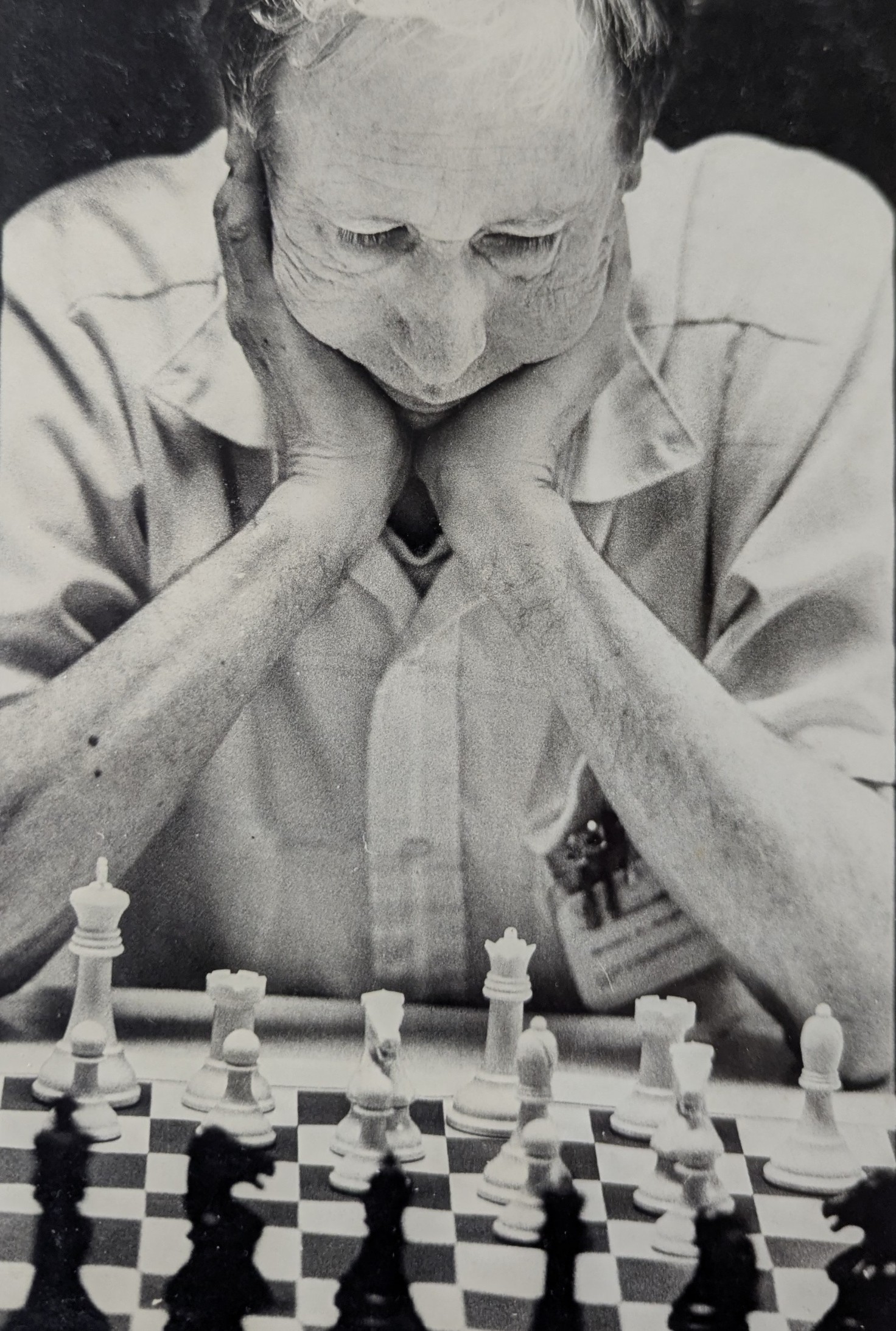
The booming voice belonged to Herb Wright, a South Jersey chess legend whose enthusiasm, mentorship, and devotion helped sustain the club for generations.
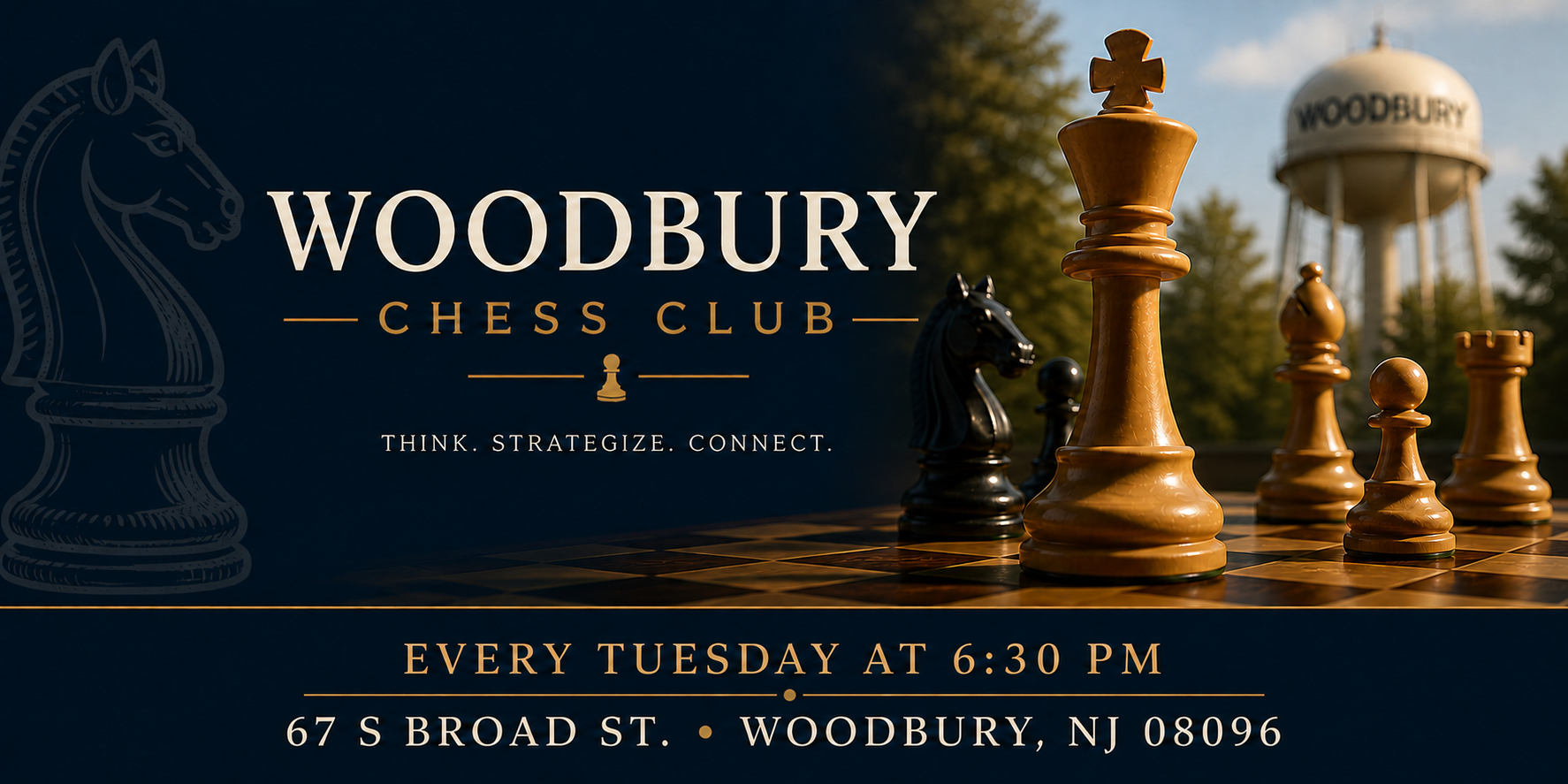
Long before online chess platforms and smartphone apps, players gathered each week in Woodbury to compete, learn, and share stories. Thanks to dedicated volunteers such as Lew Wood, Dr. John Worrall, George Cake, and Herb Wright, the Woodbury Chess Club became one of South Jersey's enduring community institutions.
The club's history is well documented in the archives of the United States Chess Federation's Chess Life and Chess Review Archives. During the 1940s, 1950s, and 1960s, the club developed a reputation as one of the region's strongest chess organizations.
Its leaders included longtime president Lew Wood, treasurer Dr. John Worrall, secretary Herb Wright, and perennial club champion George Cake. Wood, Worrall, and Wright were all highly rated Class A players, while Cake regularly competed at the expert level.
A 1961 issue of Chess Life noted that Cake had once again captured the club championship, finishing a full point ahead of his nearest rivals in a 22-player tournament. His success reflected the high standard of play that defined the Woodbury Chess Club during its golden years.
Dr. Worrall was a prominent educator and community leader who served as principal of Woodbury High School and later as superintendent of both Sterling and Eastern high schools. When I began attending the club in 1976, he was helping keep the organization running while Herb recovered from a medical setback and several longtime leaders had retired or moved away.
Once Dr. Worrall stepped back from day-to-day operations, Herb assumed nearly every leadership role imaginable—president, secretary, treasurer, and tournament director. He also served as a United States Chess Federation delegate representing New Jersey and held leadership positions with both the South Jersey Chess Association and the South Jersey Chess League.
Herb's interests extended well beyond chess. A World War II Army veteran, he was a longtime member of the Woodbury Tennis Club and an accomplished pianist who performed regularly at local venues. Before retiring, he spent more than 30 years working for RCA in Camden.
Yet chess remained Herb's greatest passion.
Wherever he went, Herb carried a well-worn briefcase stuffed with tournament records, magazines, crosstables, and his portable peg chess set.
When Herb learned that I had attended Woodbury High School, he told me he had enjoyed unlimited access to Dr. Worrall's office during school hours. The secretaries, he said, were instructed to escort him directly to the principal's office and offer him the full VIP treatment.
Curious about these confidential meetings, I eventually asked Herb what important business required such special access.
"We were playing chess," he replied with a smile.
Before the church that housed the club was renovated, the walls of the chess storage room were lined with decades of handwritten tournament crosstables and shelves filled with hundreds of chess magazines.
Formal tournaments on weeknights were less common in the late 1970s and 1980s, but if you arrived on a Tuesday evening wanting a serious game, Herb would gladly arrange a rated match. If you preferred something less formal, there were always casual games waiting.
I played many quick games against Herb over the years. As Black, he rarely strayed from his favorite opening—the Closed Variation of the Ruy Lopez. Occasionally, if Herb became distracted and found himself facing a difficult position, he would simply scatter the pieces across the board. Club members accepted these moments as part of his larger-than-life personality and deep affection for the game.
Late in his chess career, Herb had largely stepped away from tournament competition. Then one Tuesday evening, he arrived at the club carrying a trophy nearly four feet tall.
He had just won first place in the reserve section of the New Jersey Amateur Championship.
For years afterward, that oversized trophy occupied a place of honor in the club's chess room.
Herb was always teaching. As he walked behind rows of players deep in concentration, he never hesitated to share a bit of wisdom. Most often, he would declare in his unmistakable voice:
"Rooks belong behind passed pawns!"
For non-chess players, the phrase refers to a classic strategic principle: rooks are most effective when supporting advancing pawns from behind.
Herb had another favorite saying as well:
"If you're behind in material, trade pawns, not pieces."
Nearly 50 years later, I still hear his voice whenever those positions arise over the board.
Much has changed since those early days, but the spirit of the Woodbury Chess Club remains remarkably consistent. For more than 30 years, the club has benefited from the leadership of president Cliff Batezel and secretary, treasurer, and tournament director Henry Feltman. Today, that tradition continues with Geoffrey Herman, one of the club's most accomplished champions, and Dave Eckhart, whose energy and expertise are helping guide the club into the future.
The Woodbury Chess Club owes a tremendous debt of gratitude to the many volunteers who dedicated their time and talents over the decades, to the Presbyterian Church at Woodbury for providing a home for the club, and to the generations of members who continue to share a passion for the game.
For those who learned from Herb Wright, however, his enduring legacy can still be heard whenever a passed pawn appears on the board.
"Rooks belong behind passed pawns."
For generations of Woodbury chess players, it remains more than strategic advice—it is part of the club's living history.
Herb Wright, South Jersey chess legend